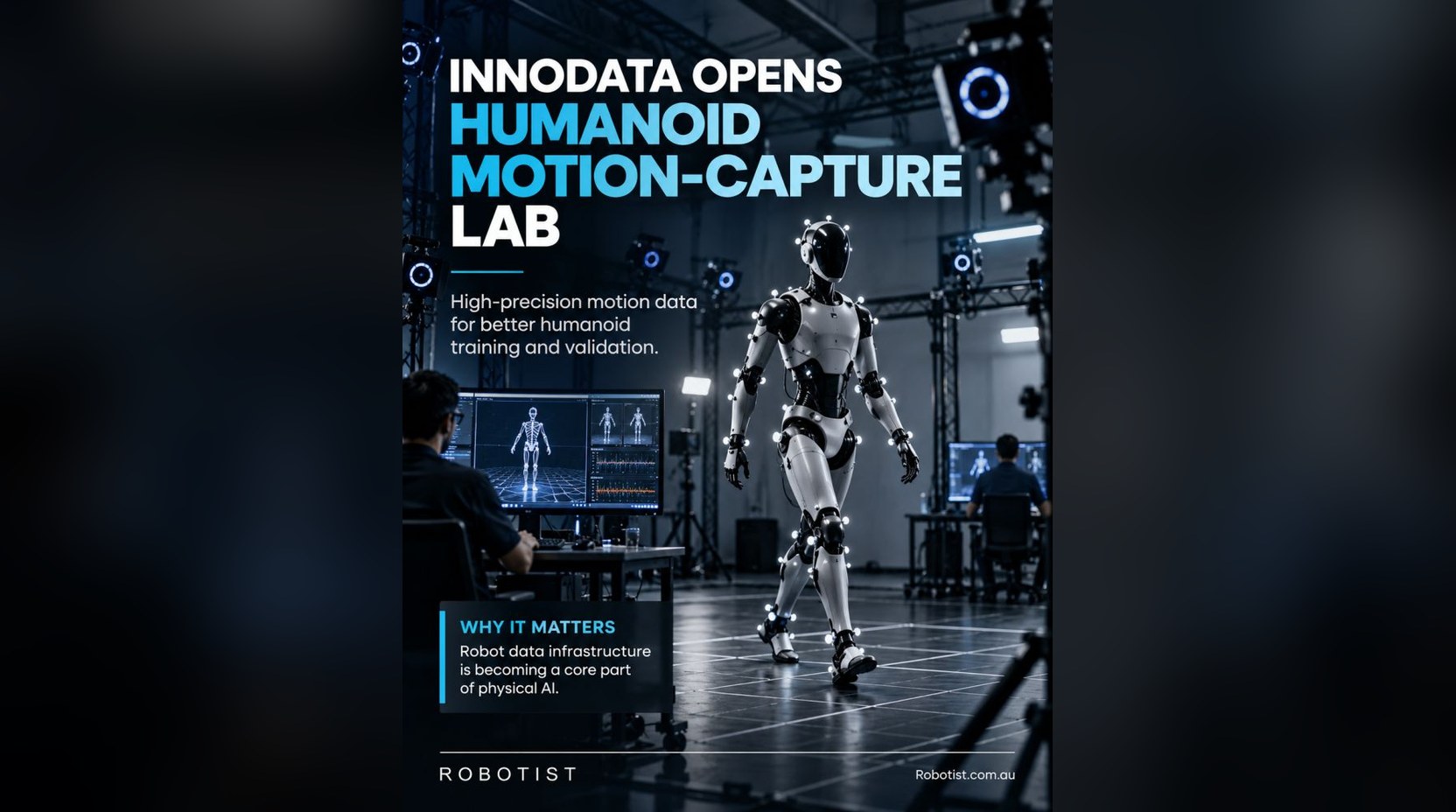
On 30 September 2026, Innodata opened a motion-capture laboratory in New Jersey built specifically to generate training data for humanoid robots and other physical AI systems. The lab uses Vicon optical tracking cameras to measure movement with sub-millimetre accuracy - a level that wearable inertial measurement unit (IMU) sensors and single-camera video analysis cannot match.
It sounds like infrastructure for data scientists rather than news for robot buyers. It is actually a useful signal about where humanoid capability comes from.
Why motion data is the bottleneck
Every humanoid robot you can buy today ships with hardware that can move. What separates a robot that walks in a lab video from one that works a full shift is the quality of the data its movement policies were trained and validated on.
Much of the industry infers 3D motion from 2D video, which is cheap but approximate. Moving a large humanoid safely - the class of machine now being sold for logistics, inspection and service work - needs better than approximate. As Innodata's robotics lead puts it, when you are training a humanoid that weighs almost 200 pounds, the readings cannot be in the ballpark.
Direct 3D capture measures the body itself - human or mechanical - and produces a ground truth that training pipelines and, just as importantly, independent performance claims can be built on.
From capture to capability
The lab's output is sold as datasets and custom projects, and it can retarget motion between platforms: capture a movement once, adapt it to a different robot's joint layout. Customers can also send robots in for evaluation against their own performance claims. That last use case may be the most commercially interesting - third-party validation is how robot performance stops being a brochure number and starts being a specification.
What this means when you buy a humanoid
- Ask what the robot was trained on. Vendors with strong data pipelines ship skills that hold up outside the demo room.
- Look for research lineage. Platforms used by university labs and AI teams tend to have broader data and tooling ecosystems around them.
- Plan your own data loop. Whatever you deploy, you will generate your own motion and telemetry data. Make sure you know where it lives and who can use it.
Humanoid platforms with strong research foundations
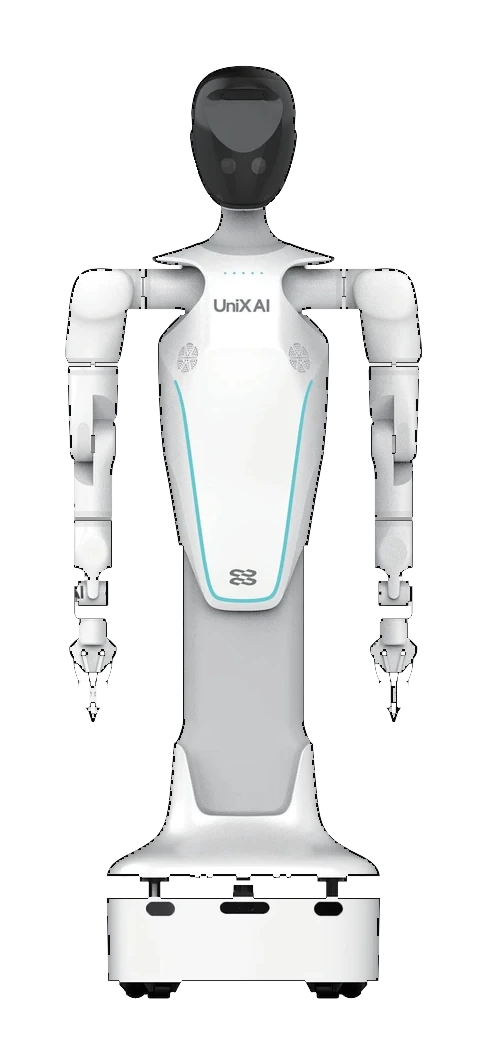
- UniX AI Wanda 2.0 - full-size wheeled humanoid with 23-33 degrees of freedom (DoF) and NVIDIA Jetson Orin compute, designed for AI research and industrial manipulation.
- LimX OLI - bipedal humanoid with 33 degrees of freedom, 157 TOPS of on-board AI compute and full ROS 2 (Robot Operating System 2) support.
- Fourier GR-3 - care-centric humanoid with 55 degrees of freedom including 12-DoF dexterous hands, built around human interaction rather than factory tasks.
If your roadmap includes embodied AI development or humanoid research, talk to Robotist about platforms that come with the data tooling to match.
Source: Innodata.