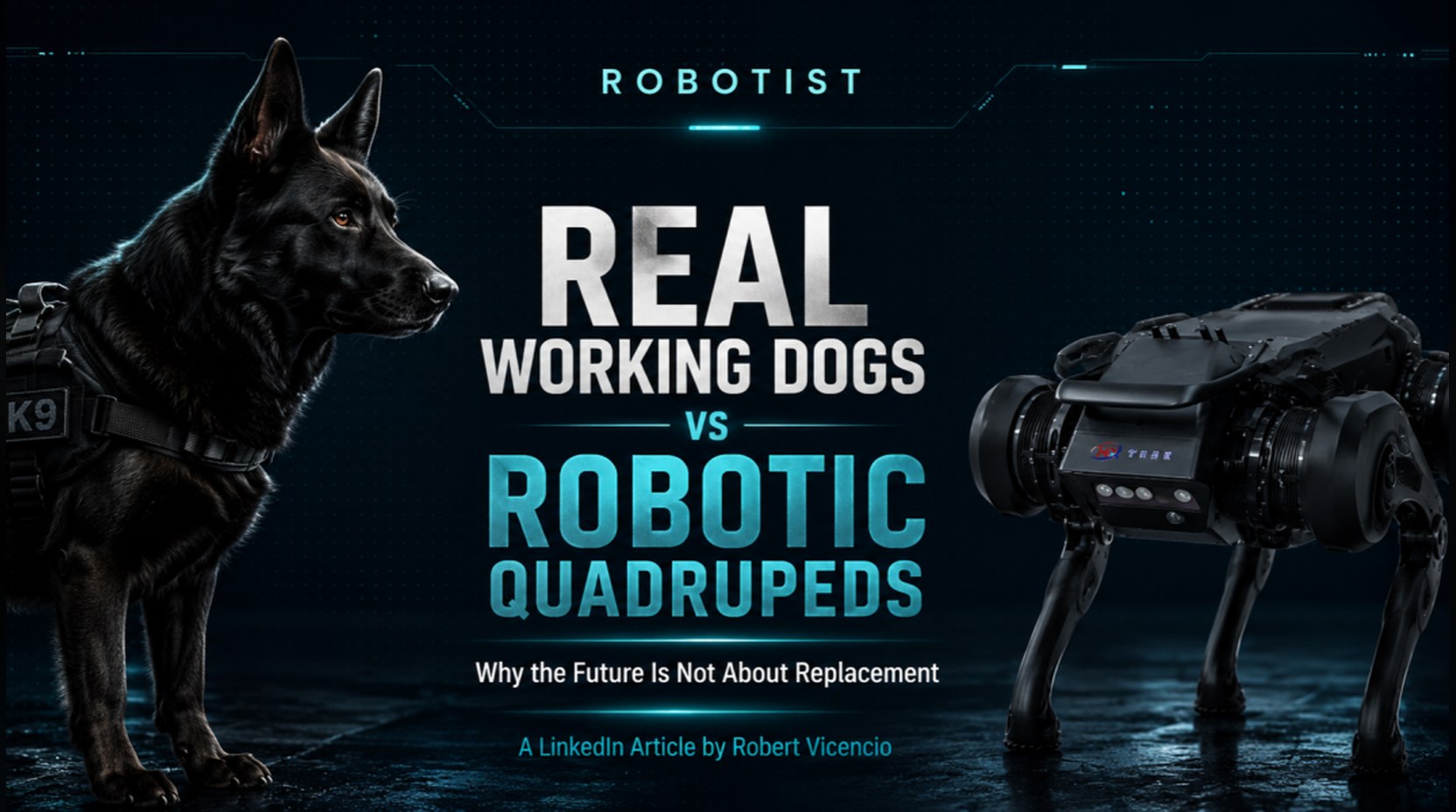
Robotic quadrupeds are often called "robot dogs." The nickname helps people picture the machine, but it also sets up the wrong question - whether robots will replace working dogs. Anyone who has watched both assets in the field arrives at a more useful answer: they are fundamentally different tools, and the strongest deployments combine them.
Different assets, different strengths
Real working dogs are highly adaptive biological detection systems. Their strengths are precise: locating target odours in complex, unpredictable environments, tracking, and working in genuine partnership with a handler. Modern sensors and AI have improved dramatically, but a real-world scent environment is rarely clean or controlled, and dogs still read it better than anything we build.
Robotic quadrupeds are mobile platforms for sensors, cameras, communications and data collection. Their strengths are equally clear: they carry thermal, visual, acoustic and gas sensors; they run in heat, cold and hazardous atmospheres; they never get tired mid-shift; and they log every reading with a time and place attached.
What the "robot dog" nickname gets wrong
Form is not function. A robot with four legs mimics a dog's mobility, not a dog's biology. Expecting a machine to replace canine detection is like expecting a camera to replace a nose - the overlap in shape hides the difference in capability.
Where robotic quadrupeds perform best
- Industrial inspection - repeatable rounds through plants, substations and construction sites, capturing thermal and visual baselines that humans cannot match for consistency.
- Hazardous environments - areas that are unsafe for people and uncomfortable for animals: chemical zones, collapsed structures, extreme heat.
- Perimeter patrol - scheduled, logged and video-documented, day or night, in weather that grounds both dogs and drones.
- Data-heavy missions - where the value is in the record: every reading geotagged and comparable over time.
The strongest model is a team
The most effective operations do not choose between dogs and robots. They build teams around what each does best: the dog detects; the robot measures and maps; the human interprets, decides and acts. In security, search and rescue, industrial inspection, biosecurity and emergency response, that combination covers ground neither asset covers alone.
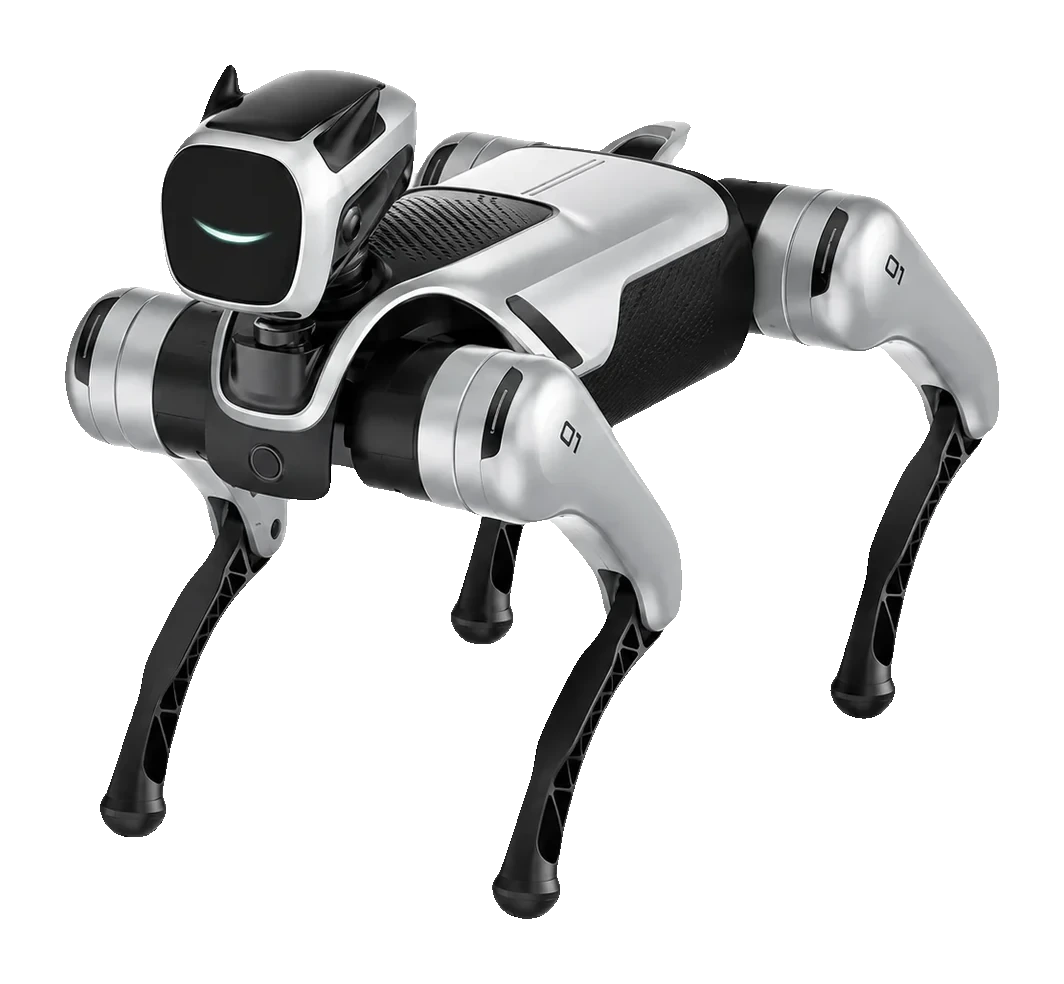
Quadrupeds available through Robotist
- MagicLab MagicDog Y1 - industrial quadruped for tough environments, with 6 m/s top speed and a 45 kg payload for sensor packages.
- Genisom M1 - large rugged quadruped with 80 cm obstacle clearance, built for disaster response and heavy inspection work.
- MagicLab MagicDog - compact open-SDK quadruped, a practical first unit for patrol and inspection pilots.
Tell us what your team needs to detect, measure or document - we will help you work out where a quadruped adds coverage. Start here.
Adapted from Real Working Dogs vs Robotic Quadrupeds by Robert Vicencio.