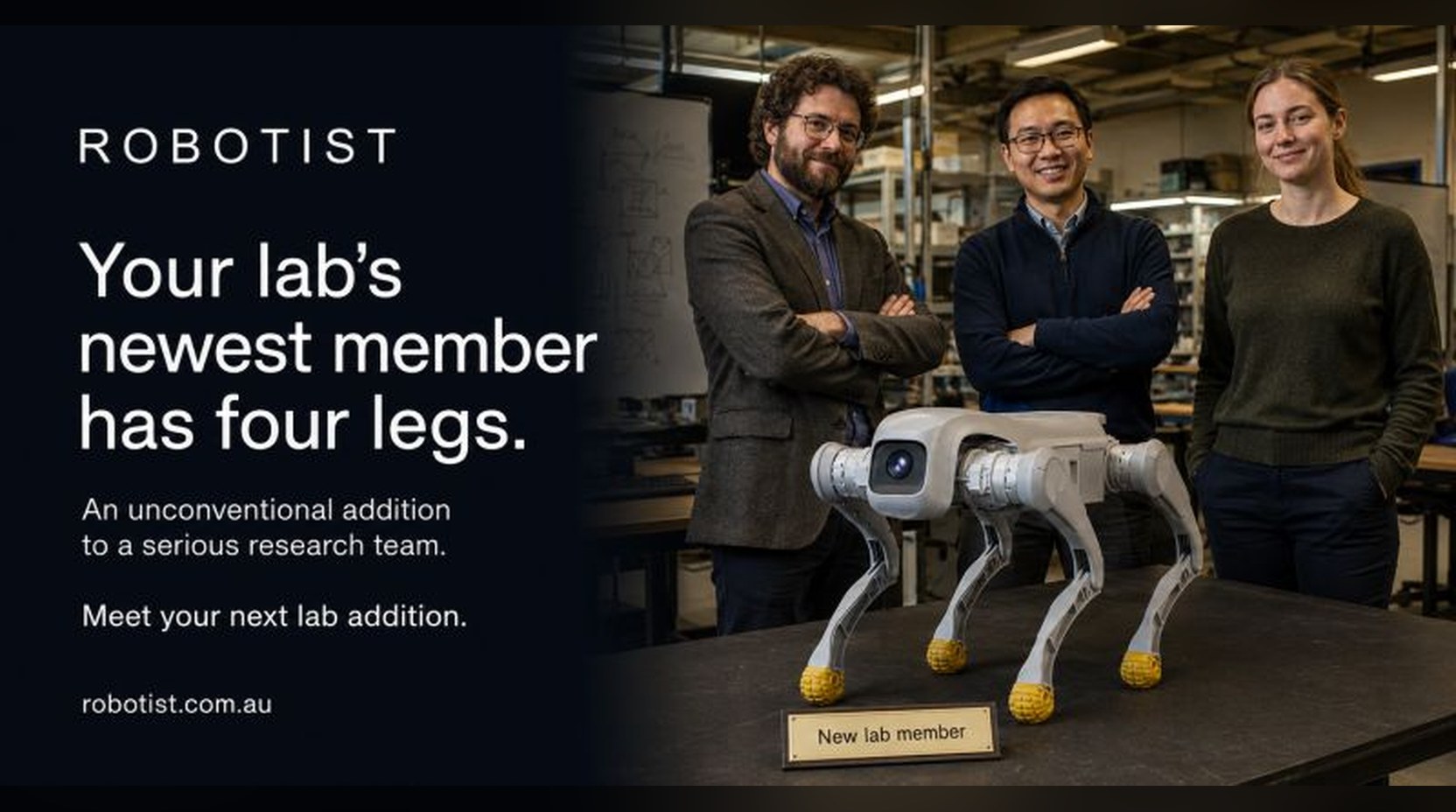
Robotics is advancing faster than most university curricula can adapt. The next generation of engineers will not only write software models; they will increasingly work with intelligent machines operating in the real world. That shift puts a practical question in front of every department: which platforms do we actually buy?
Start with what the platform must teach
The right robot for a lab depends on what it needs to demonstrate. Map your syllabus and research interests to capability:
- Locomotion and control - quadrupeds are the workhorse here: stable, forgiving, and affordable enough to field several.
- Perception and autonomy - look for on-board compute, quality cameras and depth sensing.
- Manipulation and human-robot interaction (HRI) - humanoids with dexterous arms, or wheeled humanoids that trade balance research for longer uptime.
- Embodied AI - platforms with ROS 2 (Robot Operating System 2) support and open software development kits (SDKs), so student work compounds instead of resetting.
Simulation is essential. But robots eventually need to leave the screen.
Simulation has taught the field an enormous amount, and it remains the cheapest way to iterate. It cannot teach everything: sensor noise, friction, latency, mechanical wear and the sheer unpredictability of a physical room all live on the other side of the sim-to-real gap. Students who test their algorithms on hardware learn judgment that simulation alone cannot deliver.
Budget for the whole system, not the robot
Purchase price is the visible number; the running cost decides whether the lab stays productive:
- Spares and consumables - batteries, feet, shells and cables are wear items in a teaching lab.
- Service and warranty - who fixes the robot, how fast, and at what cost after year one.
- Space and logistics - charging, storage, safety matting, and enough units for group work.
- Documentation and teaching material - curriculum packages and example projects dramatically shorten time-to-first-lesson.
Where budgets are tight, a staged approach works: start with one or two platforms for a core course, prove utilization, then expand into research fleets.
Secondary development is where research value comes from
The strongest programs treat robots as research infrastructure, not lab equipment. That means open APIs, the ability to mount new sensors, and access to the low-level control stack. Ask vendors directly about secondary development support - access to interfaces, firmware documentation and integration help. This is often what separates a platform that produces papers and prototypes from one that sits under a dust sheet.
Platforms built for education and research
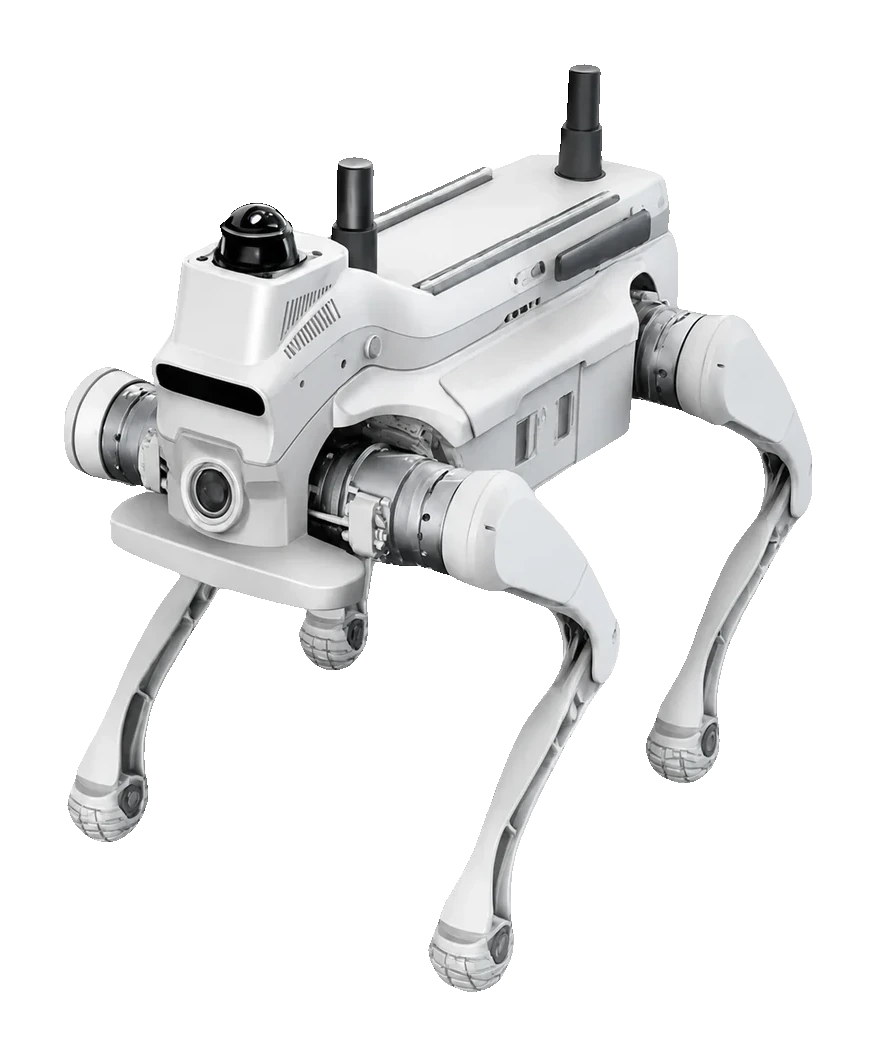
- Genisom L1 EDU - education-focused quadruped that ships with a university curriculum package: structured learning modules, lab exercises and academic support.
- CASBOT 02 EDU - full-size bipedal humanoid for university teaching, HRI research and embodied-intelligence development.
- AGIBOT D1 EDU - an education quadruped from AGIBOT for teaching robotics, AI and hands-on development.
- UniX AI Panther - wheeled humanoid with 34 degrees of freedom (DoF) and a 16-hour battery, combining manipulation with wheeled mobility for service robotics research.
Robotist works with professors, universities and research institutions to source platforms that fit teaching and research objectives - including curriculum packages, integration and secondary development support. Tell us what your program needs and we will shortlist the platforms that fit: talk to Robotist.