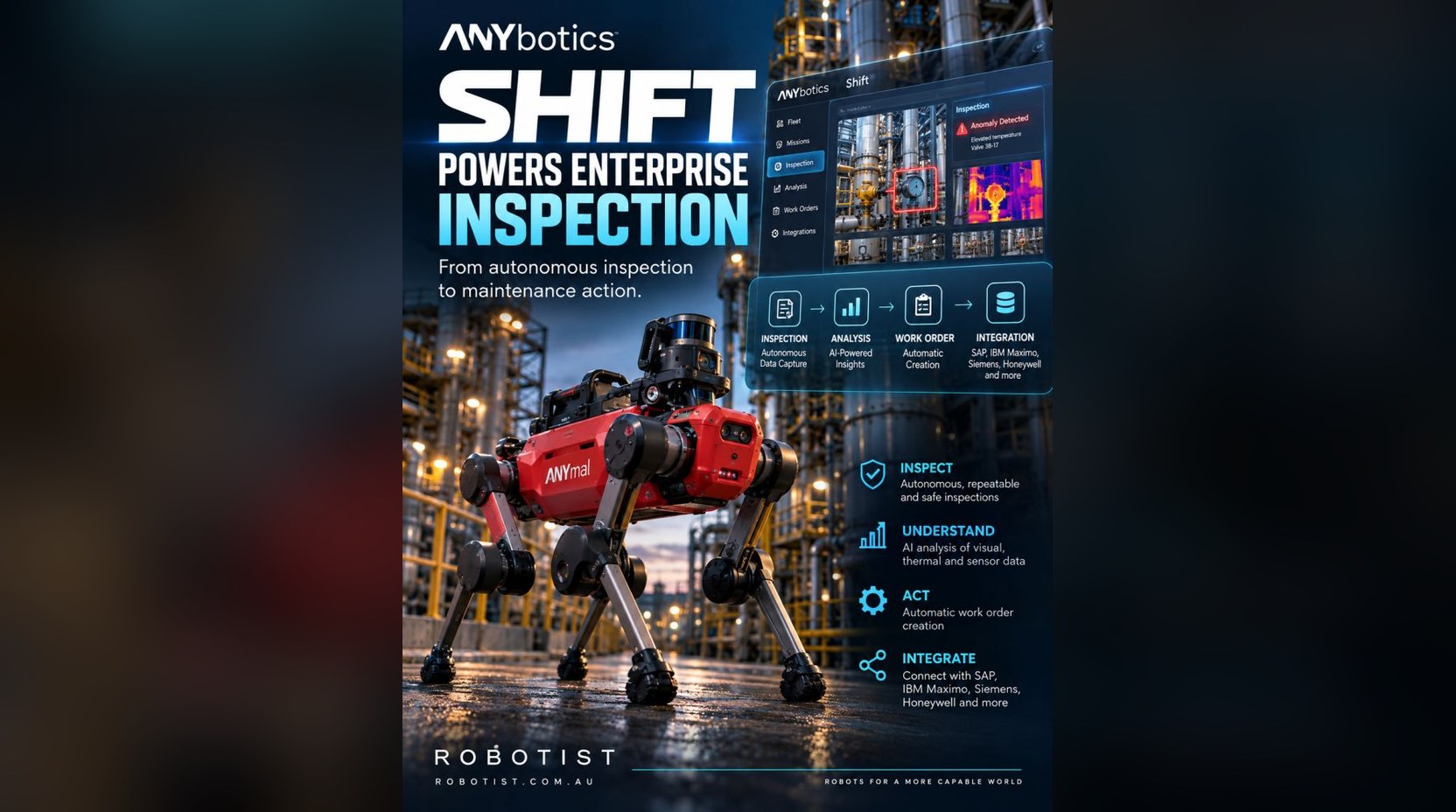
On 1 October 2026, ANYbotics launched Shift, a platform that connects plant models, robot fleets, inspection data and maintenance systems into a single workflow. It is software, but it is the clearest statement yet of where quadrupeds are heading in industry: away from one-robot side projects and toward something closer to infrastructure.
What Shift actually does
Shift extends ANYbotics' earlier Data Navigator product and is built around four modules that share one model of the plant:
- Shift Fleet - schedules, monitors and controls the entire robot fleet from one place, including status, battery and live video. Missions can be triggered directly by a distributed control system (DCS), so inspections run on the plant's own logic rather than a separate calendar.
- Shift Insight - combines thermal, acoustic, visual and gas readings with operating context. A reading only counts as an anomaly when the context says it should, which is what makes it possible to spot overheating, leaks or misalignment while they are still small.
- Shift Connect - turns confirmed findings into work orders inside the systems teams already use, with connectors for enterprise platforms such as SAP and IBM Maximo, asset performance management (APM) tools such as GE Vernova APM, and digital-twin layers like Cognite.
- Shift Maps - keeps a live digital twin of the site tied to the existing asset hierarchy, so every reading lands on the right piece of equipment.
The operational evidence behind the platform is worth noting: ANYbotics says Shift already runs across more than 200 robot deployments and handles hundreds of thousands of inspections every month. At one cement plant, the platform executed more than 33,000 autonomous inspections in 16 months.
The economics that make inspection robots work
The case for autonomous inspection is not about robots being cheaper than people. It is about catching failures earlier. Undetected equipment failures cost the world's largest companies an estimated USD 1.4 trillion a year in preventable downtime, and a single hour of unplanned outage averages around USD 250,000.
A robot that walks the same route on schedule for months builds something no manual round can: a comparable baseline for every asset over time. Once you can see an asset's degradation curve, maintenance turns from reactive to planned.
Why the workflow matters more than the robot
The lesson for buyers is that a quadruped is only as useful as the data path behind it. A robot that captures readings nobody actions is an expensive camera. What makes inspection robots pay is the chain from sensor to finding to work order - without a human retyping anything.
Hardware-agnostic fleets are coming
ANYbotics plans to open Shift to third-party robotic systems, positioning it as a command centre for mixed fleets. This matters even if you never buy an ANYmal: it points to a market where the management layer is separate from the hardware, and where the robots you buy should be chosen partly for how well they integrate.
What to look for in an inspection quadruped
- Sensor payload and mounting - thermal, acoustic and gas modules you can actually fit and power.
- Autonomous charging - docking so the robot tops itself up between rounds.
- Environmental rating - ingress protection (IP) ratings for dust and water, and the temperature range for your site.
- APIs and integration - a documented API and, ideally, connectors to your maintenance stack.
- Support and spares - service response times in your region, not just in the vendor's home market.
Inspection-ready quadrupeds available through Robotist
- MagicLab MagicDog Y1 - industrial quadruped built for inspection and security rounds, with a 45 kg payload for sensor packages.
- MagicLab MagicDog - a smaller, open-SDK platform that makes a sensible pilot unit for a first inspection loop.
- Genisom L1 - research-grade quadruped with an open API, suited to teams building their own inspection stack.
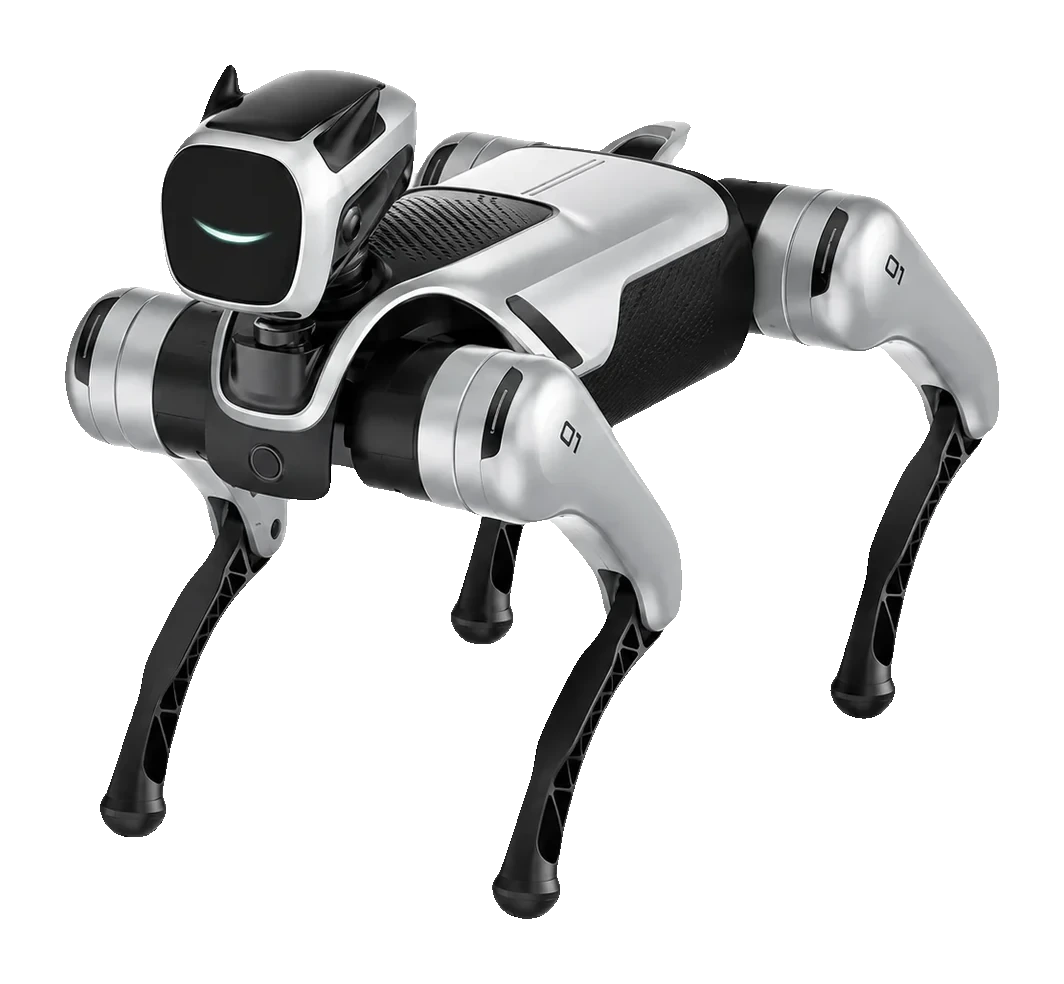
Robotist helps teams scope inspection deployments end to end - platform selection, payload integration, and the data path into your existing systems.
Source: ANYbotics.