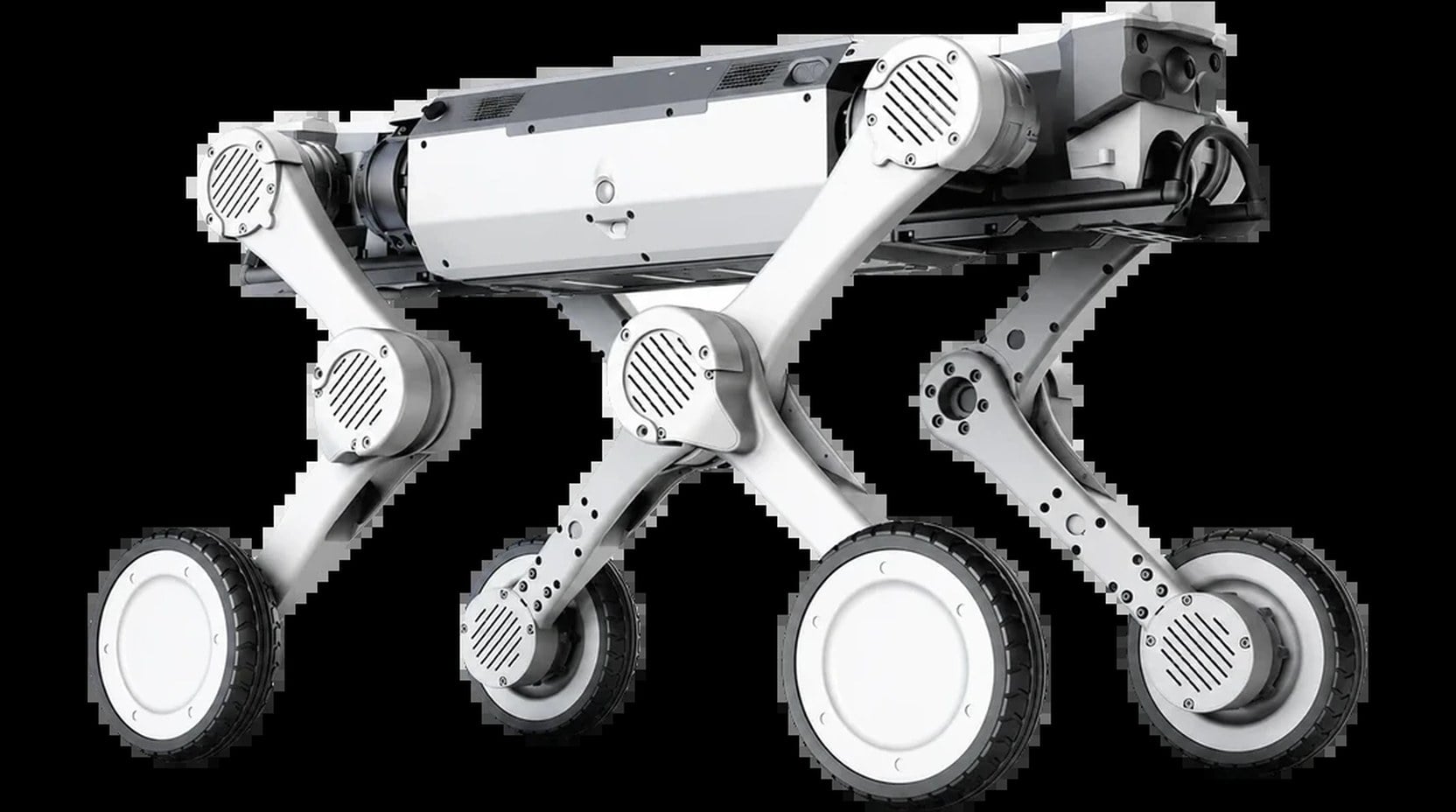
Europe has been a consumer of legged robots rather than a builder of them. That line moved with DENA Robotics, a company founded in 2025 in Delft that has produced what it calls the first quadruped designed and built in the Netherlands - a four-legged platform it presents as the first gate toward a Dutch humanoid.
The part that matters to anyone buying robots is not the flag on the side. It is what a European development track does to supply. Legged platforms currently reach most buyers through a small number of manufacturing clusters, so each region that can build them shifts lead times, support options and the concentration risk that sits inside a procurement file.
What DENA actually built
The machine, the QR1, is a modular quadruped presented as teleoperated and upgradeable rather than finished. Its lead, Esmaeil Najafi - who also holds an associate professorship in mechatronics and precision engineering at Fontys University of Applied Sciences - describes stable walking as the hard part: system integration, body dynamics, switching between gaits and continuous stabilisation all have to hold together before anything useful can be mounted on the frame.
Applications point outdoors, where wheeled robots struggle. Inspection first: agriculture, energy and power plants, oil and gas. DENA's stated policy is to sell the platform rather than a single use case, so one body can be configured per job, with new sensors and compute mounted on the frame you already own.
Where the capability line sits
Buyers should read this as an engineering milestone rather than a shipping product. Public reporting confirms stable locomotion on prepared ground; performance on stairs, steep grades and loose terrain has not been demonstrated. The robot is teleoperated, not autonomous. The humanoid DENA describes as a target is a plan rather than a product, on a timeline of roughly two years, with the control stack largely proven in simulation but not yet running on real bipedal hardware.
None of that diminishes the work. It does set the expectation: a walking prototype proves a team can solve balance and integration, not that a hardened inspection fleet is on a pallet.
Why sourcing region became a procurement question
Najafi frames legged robotics as capability rather than catalogue items - technology a country or region can build itself is technology it does not have to import. Procurement teams reach the same conclusion for less philosophical reasons: where the software stack, spares and service network sit, who can be on site when a joint fails, and what happens if that supply route changes. Regional manufacturing is a hedge against that risk, which is why this announcement travels further than one Dutch machine.
What to ask before committing to any legged platform
- Gait robustness. Stairs, slopes, gravel, wet steel. Request video on your terrain, not a demo floor.
- Autonomy versus teleoperation. How much of a shift runs without an operator, and what the operator does for the rest of it.
- Payload and power budget. Sensor packages, onboard compute and mission duration once the payload is fitted - not the empty-machine spec.
- Upgrade path. Module replacement on the existing body, or a new generation purchase every two years.
- Service reality. Spares lead times, local technicians, warranty terms, and training for the crew who run it.
Platforms you can deploy now
The legged platforms available through Robotist ship as working units, with setup, training and maintenance handled on site:
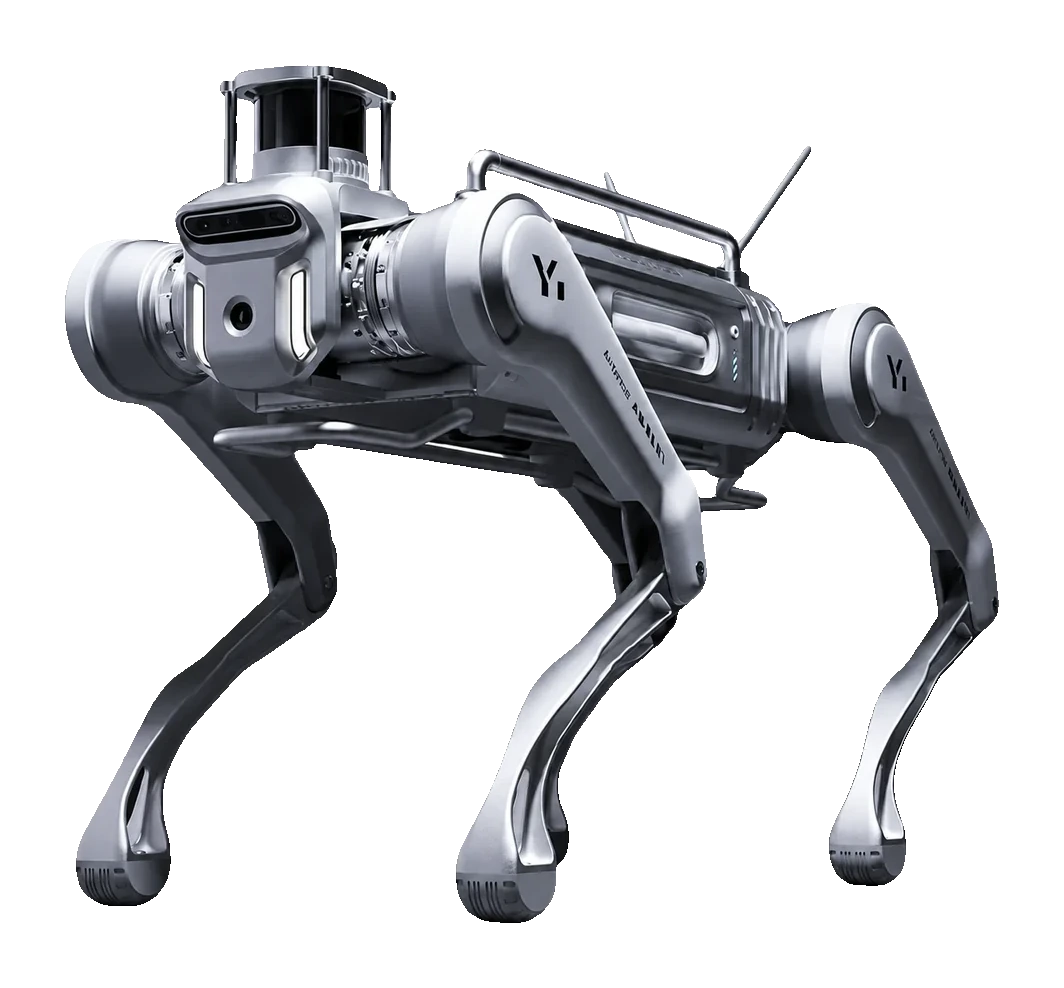
- MagicLab MagicDog Y1 - industrial quadruped, 6 m/s top speed and 45 kg payload, built for inspection, security and logistics.
- Genisom M1 - rugged quadruped with 80 cm obstacle clearance for disaster response and heavy industrial surveillance.
- Genisom L1 - research quadruped with an open API and 6 km operational range for algorithm and multi-robot work.
If the deployment has to be running on site soon, choose a platform whose gait behaviour, spares and service are already proven in your region, and price the mission rather than the machine. European legged hardware belongs on the watch list - more of it is coming - but a watch-list entry is not a procurement plan. Tell us what you need inspected and we will help you match a rugged quadruped to the terrain your team actually works in.